Hornets Exterminator in NJ – Professional Hornet Control
When it comes to a hornet nest on your New Jersey property, you want a professional who actually knows what they’re walking into. This isn’t a job for an everyday handyman with a can of Raid. Arnold’s Pest Control has been dealing with hornets and other stinging insects across New Jersey since 1952, and our technicians will get the nest handled fast, before anyone gets stung.
Hornet Species in New Jersey
Three types of hornets (and near-hornets) show up regularly on New Jersey properties.
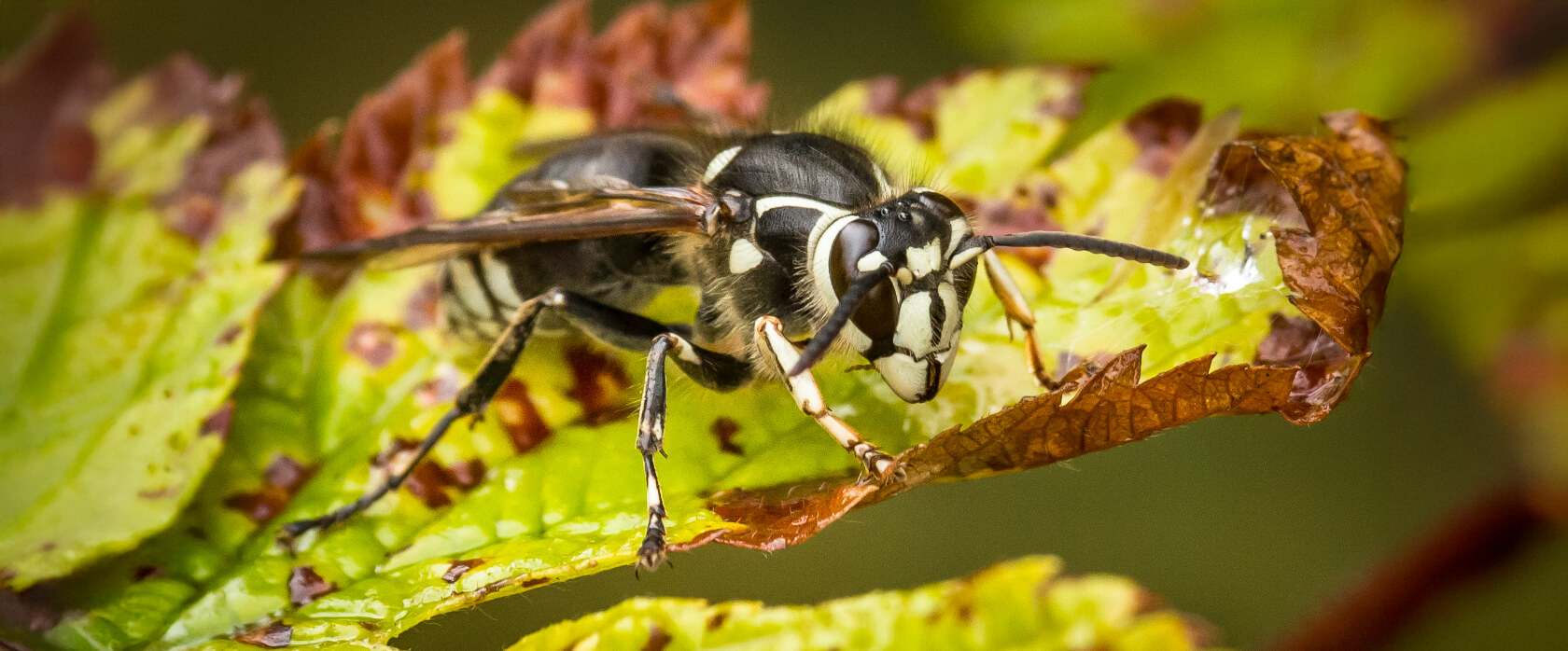
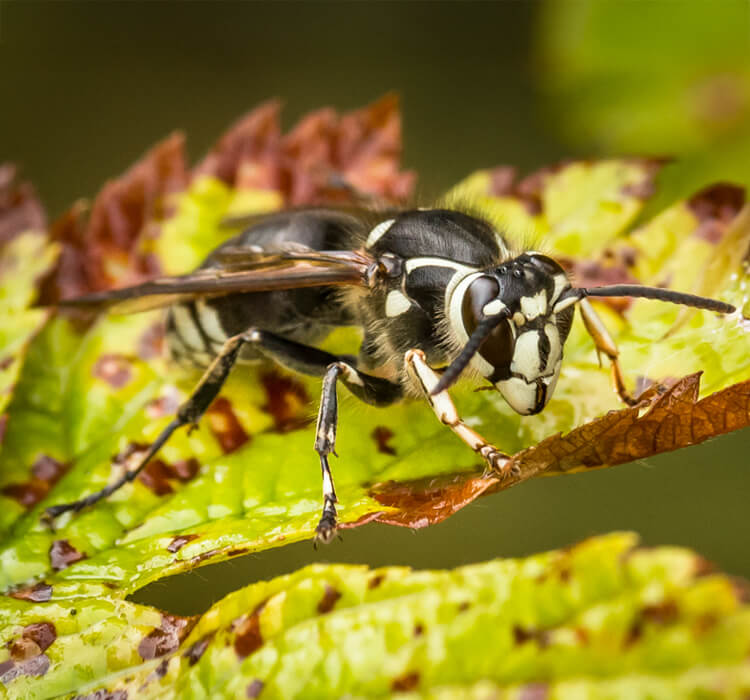
- Bald-faced hornets aren’t actually hornets at all – they’re actually a species of yellowjacket. You’ll recognize their large, grey, papery nests hanging from tree branches, porch ceilings, or under roof eaves. Disturb one of those nests and the whole colony comes after you. By August, a single nest can hold 400 or more workers and grow to the size of a basketball.
- European hornets are the only true hornet species living in New Jersey. They’re bigger than most wasps you’ve seen, and they have an unusual habit: they fly at night. Their nests end up in wall voids, hollow trees, and attic spaces, which makes them harder to find and trickier to remove.
- Cicada killers get people calling us every summer, convinced they’ve got a hornet invasion. These wasps are very large, over an inch in length, but they don’t tend to bother people at all. They live alone in sandy soil and very rarely sting humans. Worth knowing about, though, because if what you’re seeing looks like a hornet but isn’t aggressive, it might be one of these.
Identifying Stinging Insects
More than 4,000 species of bee are found in the United States, and the whine of a bee, hornet, or wasp right next to your ear can get your heart pounding. If they’re nesting inside your house, in your yard, or beneath your porch, you need to get a handle on aggressive stinging insects. Your family’s safety is one issue, and the structural integrity of your home is another.
Here’s how to identify stinging insects:
- Western honeybees are fuzzy, golden brown insects with black abdominal stripes. Honeybees and bumblebees are valuable pollinators we want to protect, not kill. If we find honeybees on your property, we’ll connect you with a local beekeeper who can relocate the hive safely
- Bumblebees are rounder and larger than honeybees, covered in fluffy yellow and black hair
- Carpenter bees are larger than bumblebees with a broad head and can bore into wood structures
- Hornets have a narrow waist and are hairless, they build paper nests and tend to be aggressive
- Wasps also have a narrow waist and are hairless, making their nest out of paper or in the ground
If you get stung, it’s important to treat the site right away and watch for signs of an allergic reaction. These can look like swelling beyond the sting site, difficulty breathing, or dizziness that requires immediate medical attention.
Most bees are actually doing us a favor as pollinators. Hornets and wasps will go on the attack if they feel threatened – and unlike a honeybee, they can sting you repeatedly. Carpenter bees won’t sting you (the males can’t, and the females seldom do), but they will chew tunnels through your deck and fascia boards if you leave them to it.
If you spot stinging insects gathering around your property and you’re not sure what you’re looking at, give us a call. We’ll come out and identify them.
Why Hornets Are Dangerous
Here’s what makes hornets worse than bees in a confrontation: they don’t lose the stinger. A honeybee stings once and dies. A hornet stings you, pulls out, and stings again. And again. When a nest gets disturbed, the entire colony responds with dozens of hornets coming at you at once.
For a person with a venom allergy, even one sting can trigger anaphylaxis. For everyone else, multiple stings from an angry colony still mean a trip to urgent care. Children and pets are especially vulnerable because they might kick a ground nest or shake a branch without knowing what’s up there.
That 20 dollar can of wasp spray from the hardware store usually just makes them angrier. Without proper protective gear and knowledge of hornet behavior, spraying a nest yourself is asking for trouble. We see the negative results of DIY attempts far too often.
Our Hornet Removal Process
Arnold’s approach to hornet problems is simple: find them, eliminate them, make sure they don’t come back.
- Inspection: We examine your property carefully to find any active nests and accurately identify the species involved. Because hornets sometimes build secondary colonies in places that aren’t immediately visible, our inspection covers eaves, trees, crawl spaces, wall voids, and even underground.
- Treatment: We use targeted products to eliminate the colony. All treatments are selected for effectiveness against the specific species on your property, with safety front and center. Your kids and pets are never at risk with our EPA-approved treatments.
- Nest removal: Dead nests still attract other pests (ants, beetles, secondary wasps), so we take them down and dispose of them. There’s no point leaving a rotting nest stuck to your house.
- Prevention: Before we leave, we’ll explain what drew the hornets to your property and how to keep them from coming back. Sealing gaps in siding, keeping outdoor food covered, cutting back vegetation that touches the house are a few of our practical steps that actually work.
When Are Hornets Active in New Jersey?
Hornet queens come out of hibernation in spring – usually April or May in New Jersey. They start building brand new nests from scratch. Through June and July, the colony grows steadily, and by August and September the nest is at full capacity with the hornets at their most aggressive.
As soon as the first hard frost hits, the colony dies off. The only survivors are newly mated queens who hide under bark, in leaf litter, or (very unfortunately) inside your attic until spring.
The earlier in the season you catch a nest, the easier and safer removal is. A May nest might have 20 hornets in it, but an August nest could have 400. If you’ve been noticing hornets around your property in spring, that’s when to call. For same-day removal, late evening or early morning works best – hornets are sluggish when temperatures drop. No matter what the season, get in touch with our team and we’ll be there.
Frequently Asked Questions
Can hornets sting multiple times?
Yes, they can. Hornets keep their stinger after each sting, which makes them more dangerous than honeybees in close encounters. A single hornet can sting you three, four, five times before you get away. Anyone with insect venom allergies should treat hornet proximity as a serious concern.
How do I know if I have hornets or wasps?
Size is the easiest giveaway – hornets are noticeably larger, usually over an inch long. Their nests look different too: hornets build enclosed, papery structures (grey or brown) while many wasp species build open-celled umbrella nests. Not sure what you’ve got? Call Arnold’s at (908) 276-8062 and we’ll identify the species on-site.
Will hornets return after nest removal?
They won’t reuse the same nest – that’s a one-season structure. But if the spot that attracted them hasn’t changed (a sheltered overhang, a gap in your siding, nearby food waste), a different queen could pick the same location next year. That’s why our removal service includes prevention recommendations specific to your property.
When is the best time to remove a hornet nest?
Spring or early summer, before the colony reaches full strength. During the day, late evening or early morning is safest because the hornets are least active then. That said, a nest in a high-traffic area near your front door, above your deck, or beside the swing set shouldn’t wait, regardless of the calendar. Give us a call and we’ll handle it.





If pests come back so do we. Guaranteed.

Homeowners and companies love us.
Pests, not so much.
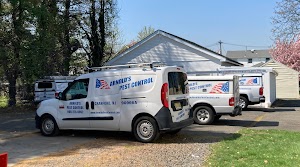
My extended family and I have used Arnold’s Pest control for 20 years for pests like termites, skunks, squirrels, mice, and even rats, with great success. I’ve recently used them for bees, hornets and ants, also with great success. Arnold’s workers are always prompt, professional and honest. Having a long-term relationship with local community trade businesses is good for me and the community.
– Angela O
We have been working with this company since we opened. They are always very responsive and professional. Highly recommended!
–Jess Bakeshop
Brian is the best! This is our 2nd time we called about a squirrel invasion (2 different houses). Talk about good service. He went out and fixed the problem the same day I called. You don’t get this kind of service anywhere. Thank you.
–Faith L.
Talk to us today.
The company
we keep